


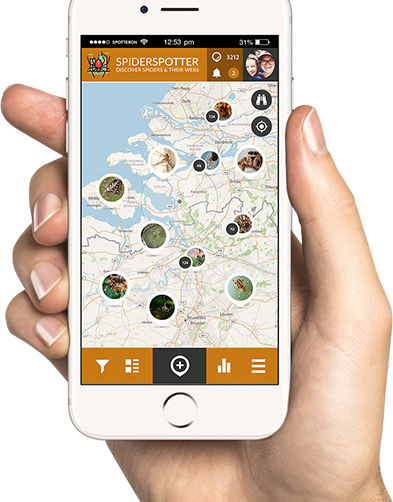
LET'S SPOT SPIDERS!
Download the SpiderSpotter App for Android or IOS and help with your observations!


Download the SpiderSpotter App for Android or IOS and help with your observations!
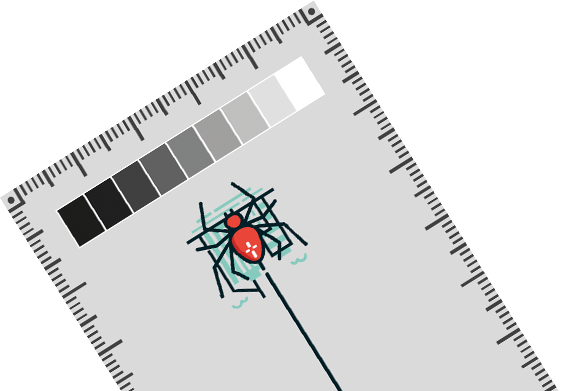
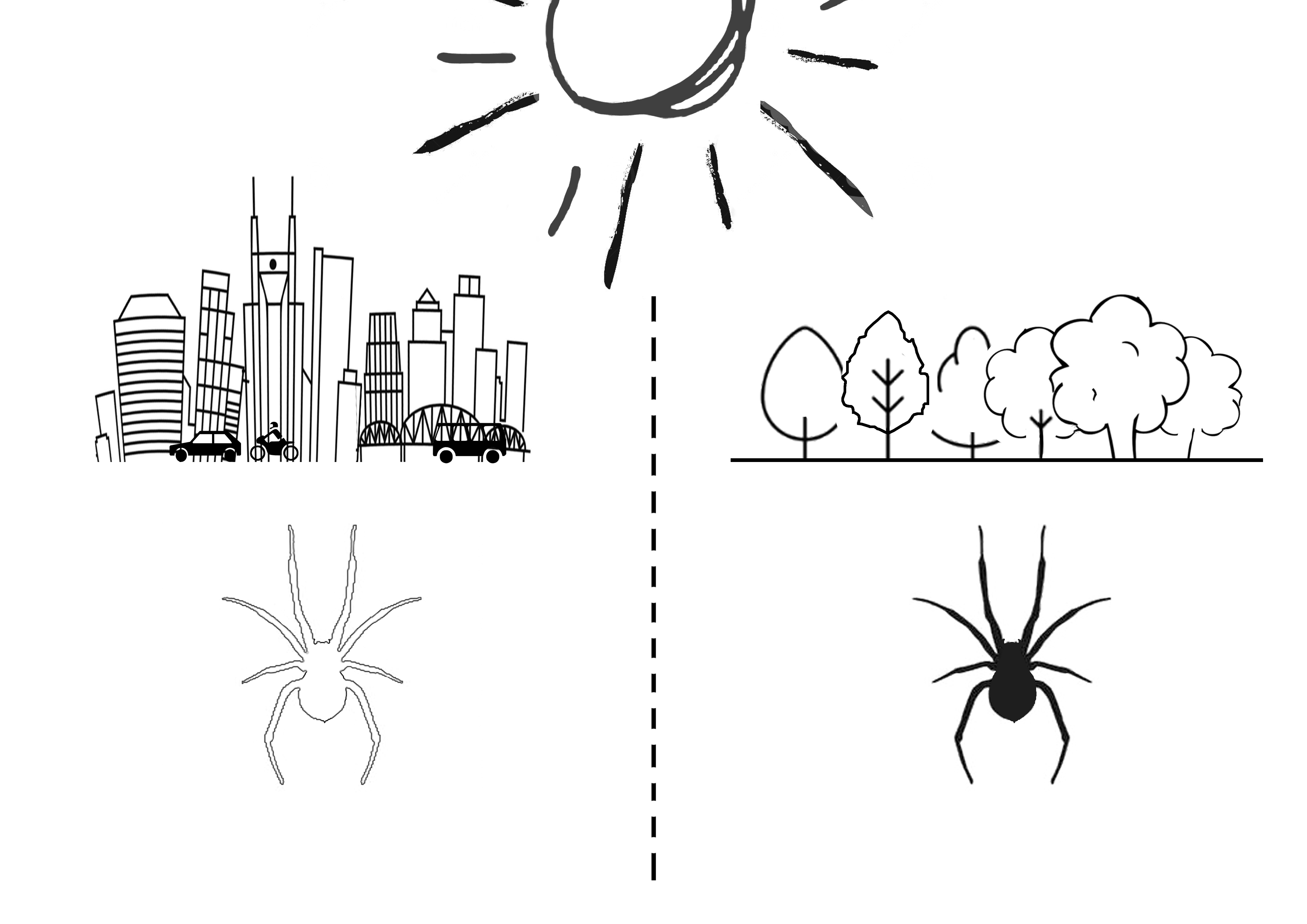
Do spiders in cities build their webs differently from spiders in natural habitats? Use the SpiderSpotter Card to help research!
Download it here


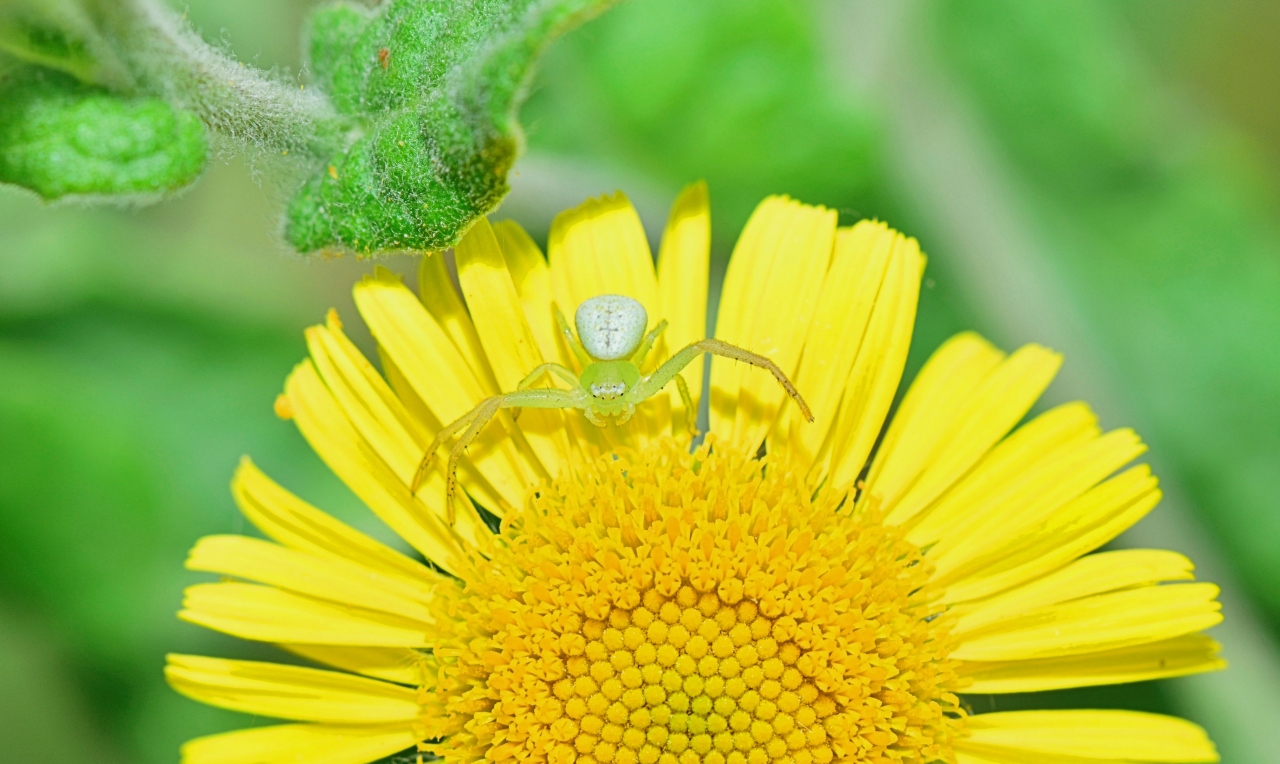
Have you ever walked around the city in the summer? Then you know it can get very hot because of all the asphalt and the concrete that retains the heat! Staying cool in this heat is not only a problem for humans, but also for animals. But this is just one of the challenges they face. The city is a completely new environment that they must be able to adapt to. Cities can therefore be seen as "living laboratories" where evolution takes place in real time! In the SPIDER-CITY project we want to investigate how spiders can adapt to city life.
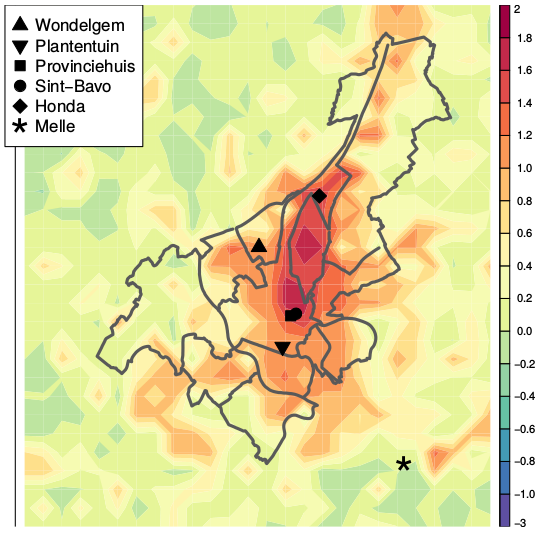
In the centre of Ghent it gets hotter than in the countryside (Steven Caluwaerts, http://www.observatory.ugent.be/)
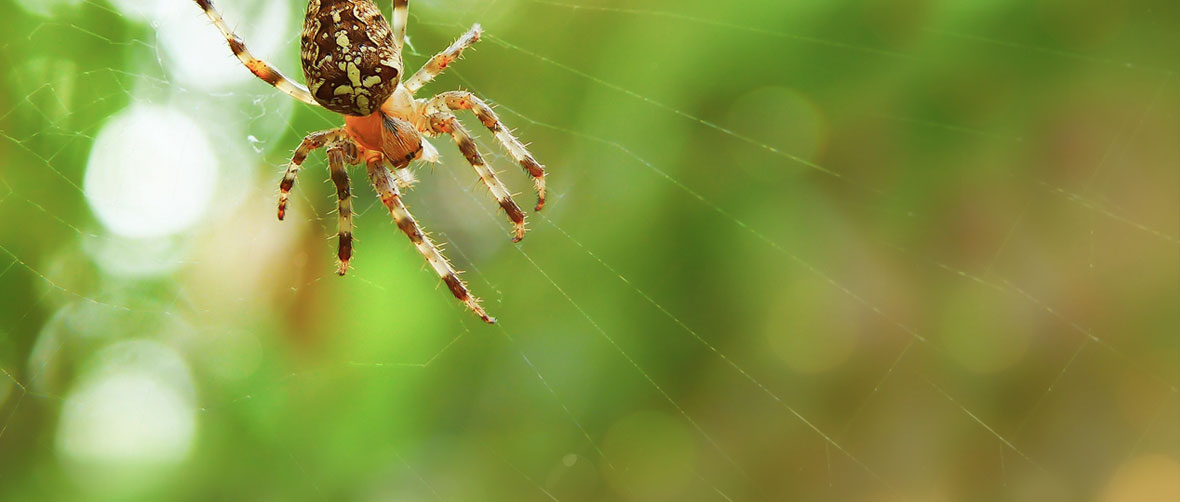
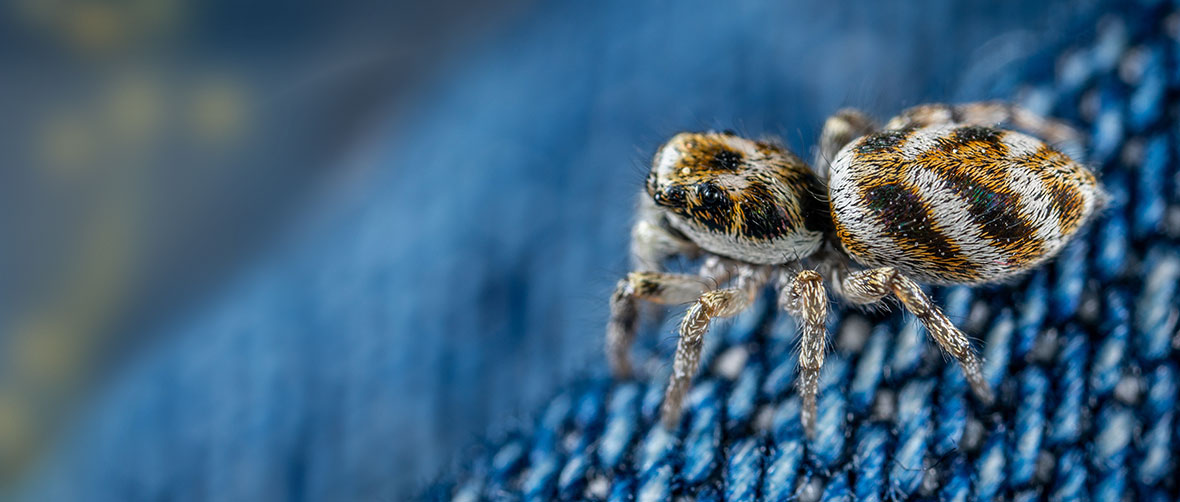
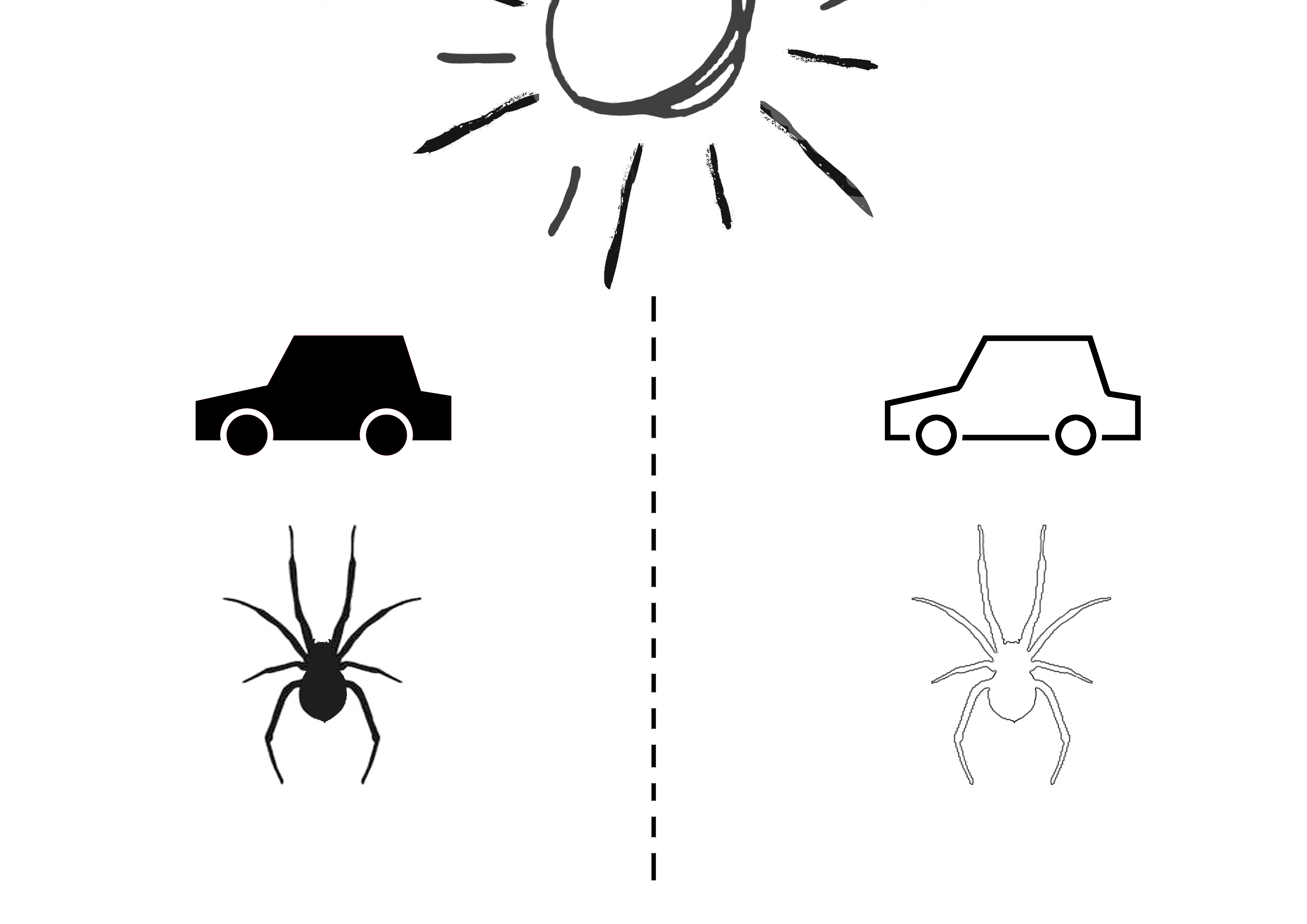
Spider colour: Much like a white car heats up less in the sun compared to a black car, so does a lighter spider heat up less compared to a dark spider. Therefore we expect city spiders to evolve a more lighter colour as this protects them from overheating in an already hot city.
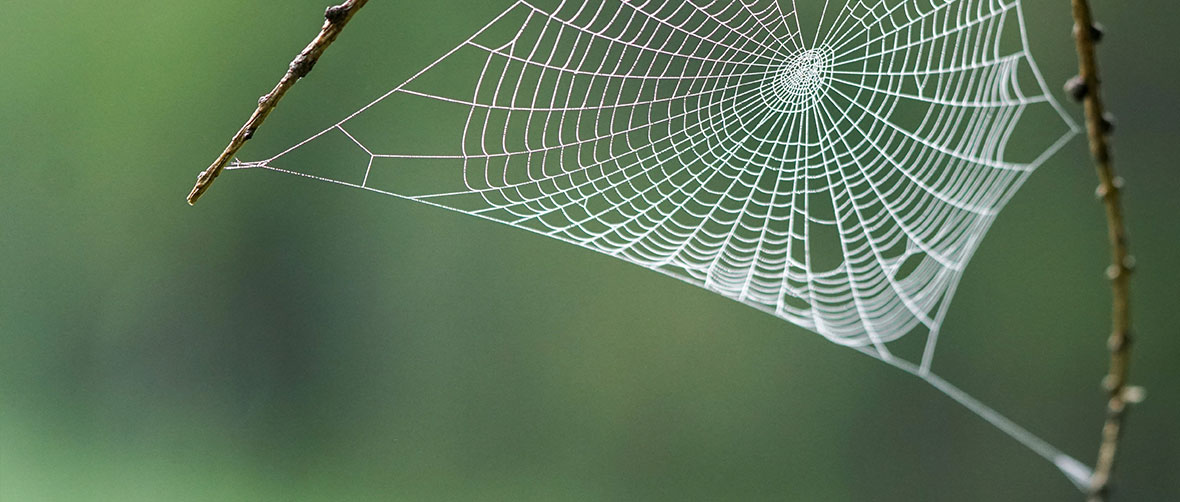
Spider webs: As the main tool for prey capture, webs are crucial for spider survival. Due to a lower supply of prey in cities, we expect to see webs with a smaller mesh size that are more efficient in capturing prey.
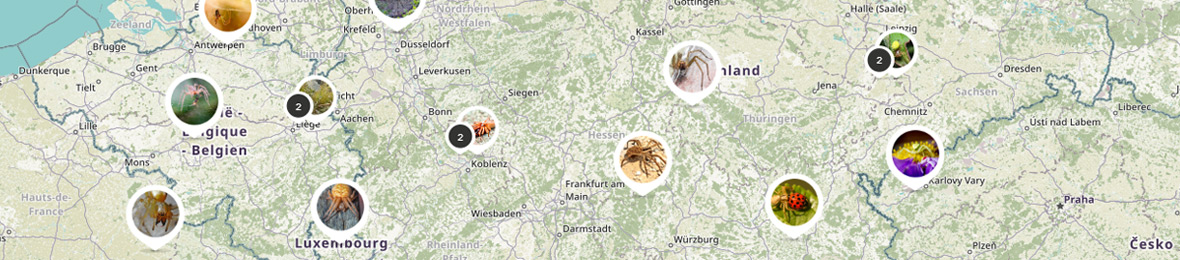
You can participate in the SPIN-CITY project in several ways. With the SpiderSpotter app you can take pictures of spiders and their webs or you can pass on specific observations. You can then analyze your own photos and those of others on the SpiderSpotter website, calculating the color and length of the spider or web. We are currently developing this tool and it will be available at the beginning of 2020. Photos that you are taking now will then be available for analysis. An interactive map ensures that our results are accessible to everyone who is interested!
This workflow allows to set up your own scientific project, from data collection to analyzing data to viewing results. It is perfectly possible to only take pictures or to only analyse them. You are not obliged to go through the entire process, you can join in wherever you want. This approach can be specifically interesting for schools and other organizations that want to have a taste of the scientific method. We are therefore currently also working on putting together an supporting package on how Spider-City can be used in the classroom.
Not only do we get crucial information about how animals can adapt to climate change, studying spiders can also be very useful for us humans! We can use spider color as a natural thermometer and thus better determine how quickly our environment heats up. And who knows, by examining in detail how a spider uses color to stay cool, we might even find new ways of staying cool in the city ourselves!
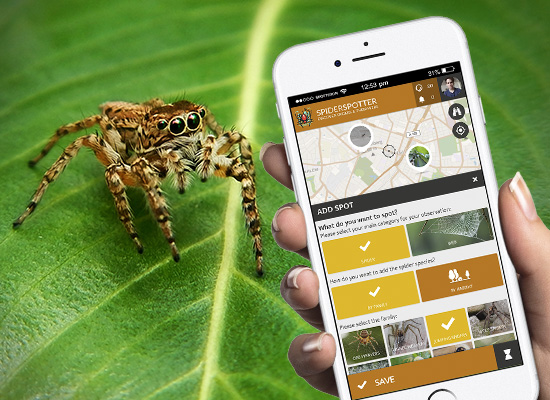



Download the App on your smartphone now or open the map in your browser:
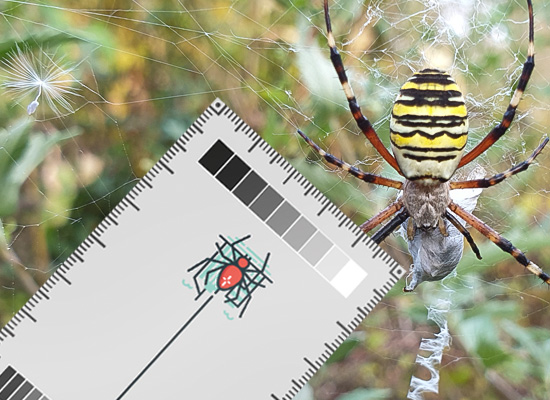
Do you want to help measuring spiders for science? Download the SpiderSpotter Card for self printing at home and hold it in the pictures you take in the SpiderSpotter App. With the measurement reference, we can determine the size of your spider or web observation better. You can also order it at spiderspotter@UGent.be, provide your address and the number of cards you need and we will send them to you!
When holding the SpiderSpotter Card near the spider or a spider's web, please make sure that a ruler and one of the brigthness gradient strips is visible in the picture. You can read more about how to take the pics in our info section!
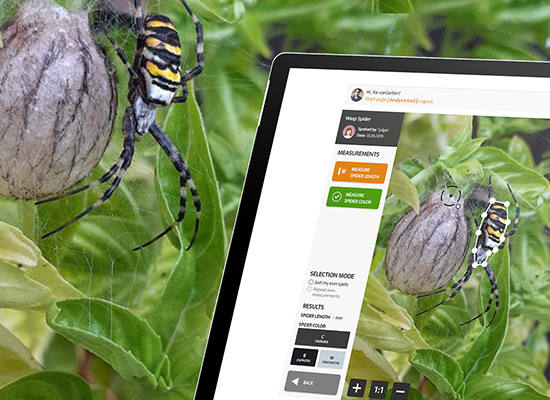
With the new SpiderSpotter Data Analysis Tool, you can actively participate in generating scientific data! The online interface fetches spider observations live from the Citizen Science App and offers a range of tools to measure the size and the average colour of the spiders. Simply access the Data Analysis Tool and log in with your App account!
You can even select an option to just work with your observations from the App and export your measured data if you want to do your own analysis.



 Download PDF